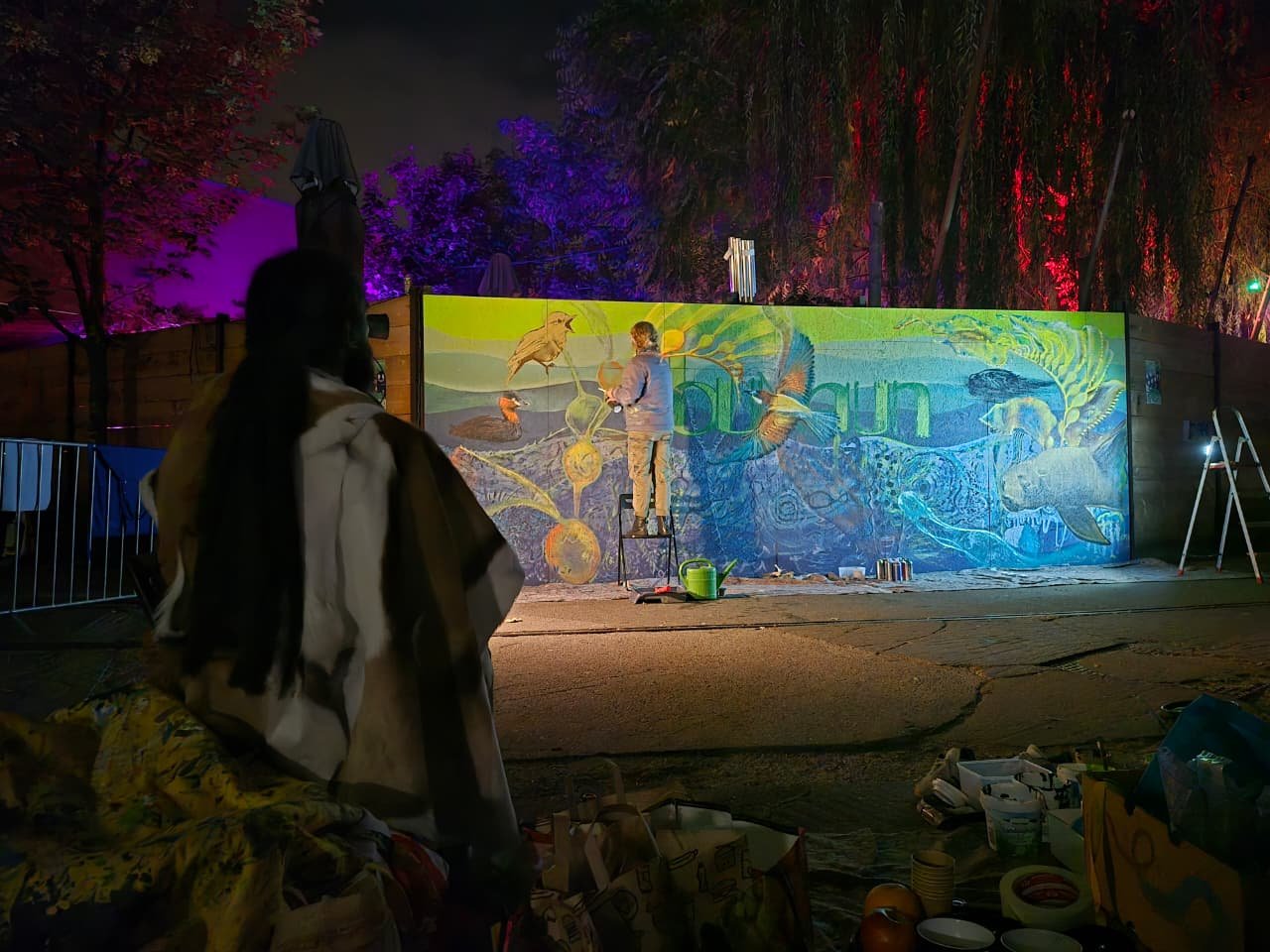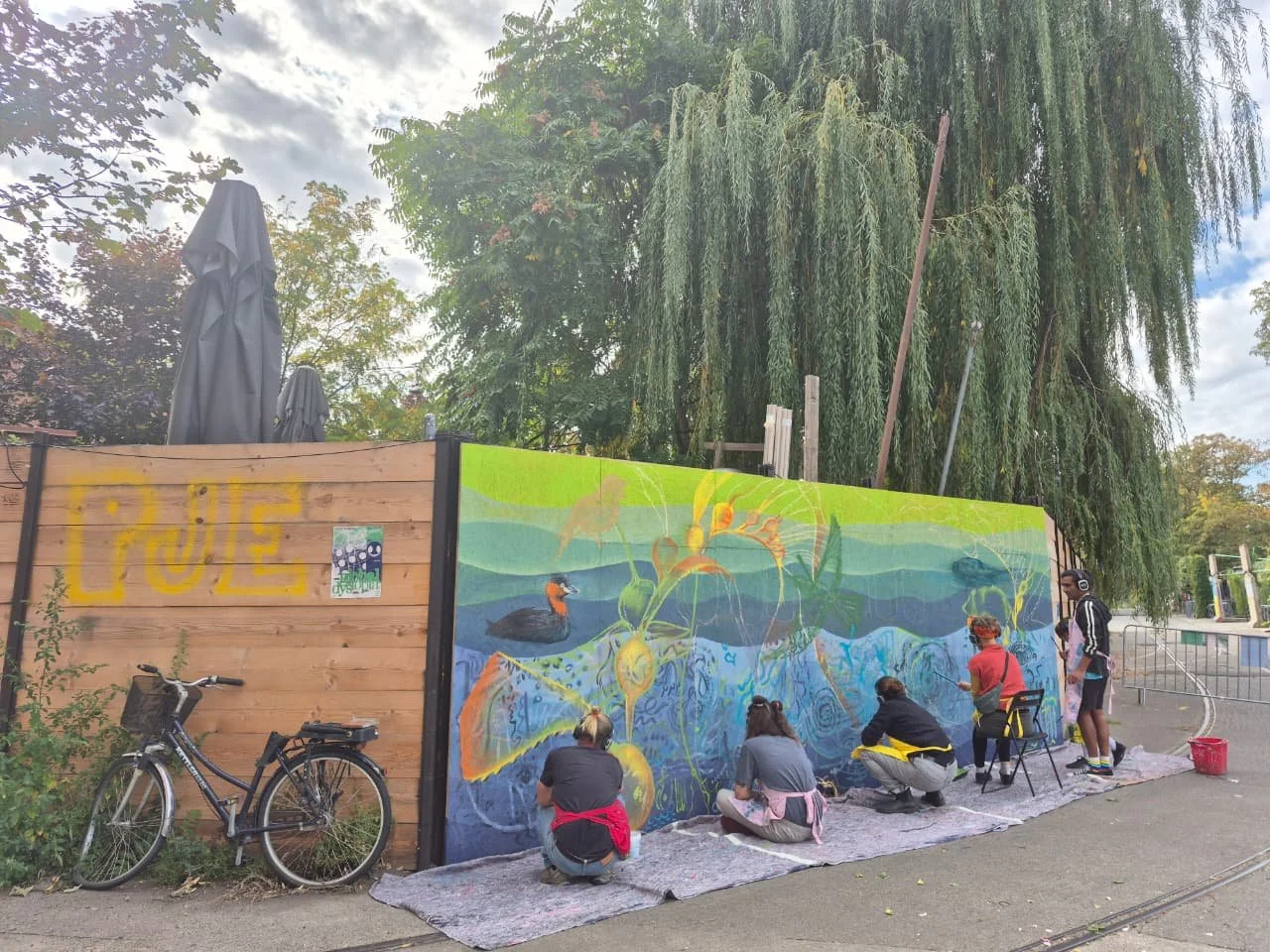
This October, our “Listening for Life” science-art, community outreach project reached the city of Berlin for the 2026 Global Dystopia Sound-Art Biennial.
Rooted in expanding our understanding of listening, the Global Dystopia Sound-Art Biennial explored sound as a method of inquiry into the natural world, a way to reconnect with and relate to nature, and an important mode of ecological knowledge production. This multidisciplinary symposium brought together artistic, scientific, and activist perspectives, offering a platform for audiences to “reconsider sound and listening as a means of reconfiguring our relationships with one another and with the planet we inhabit” – Mario Asef, Artistic Director.
Strongly mirroring our Listening for Life’s project mission, our Co-Director, Dr Tess Gridley, was invited to present on behalf of the African Bioacoustics Community at this year’s Biennial, while our science-art collaborative team joined to host a series of bioacoustics-inspired “participaintory” workshops.
Tess spoke about the diverse work of the Sea Search team and how our acoustic work has become an important, mindful refuge from the more physically and emotionally taxing research we’re conducting into Cape fur seal health during the current rabies epidemic in South Africa. She explained the importance of sound in the environment and the vital information we can gain by listening to it, whilst going into detail about our different bioacoustics projects. This included the development and objectives of our Listening for Life project, its importance and impact, finishing off with a poem she created when first initiating this science-art outreach project in 2023.
During four workshops, hosted on Saturday 3rd of October by the science-art team, participants were invited to dive deep beneath the waves during a “Listen & Sea” Silent Lab experience. Wearing headphones, participants embark on a guided marine audio journey through the highly biodiverse waters of False Bay, Cape Town. As they listen to the grunts, clicks, whistles, and singing of the bay’s inhabitants, they translate those sounds into brushstrokes onto the wall, layering the mural with a visual representation of the ocean’s acoustic vibrancy.
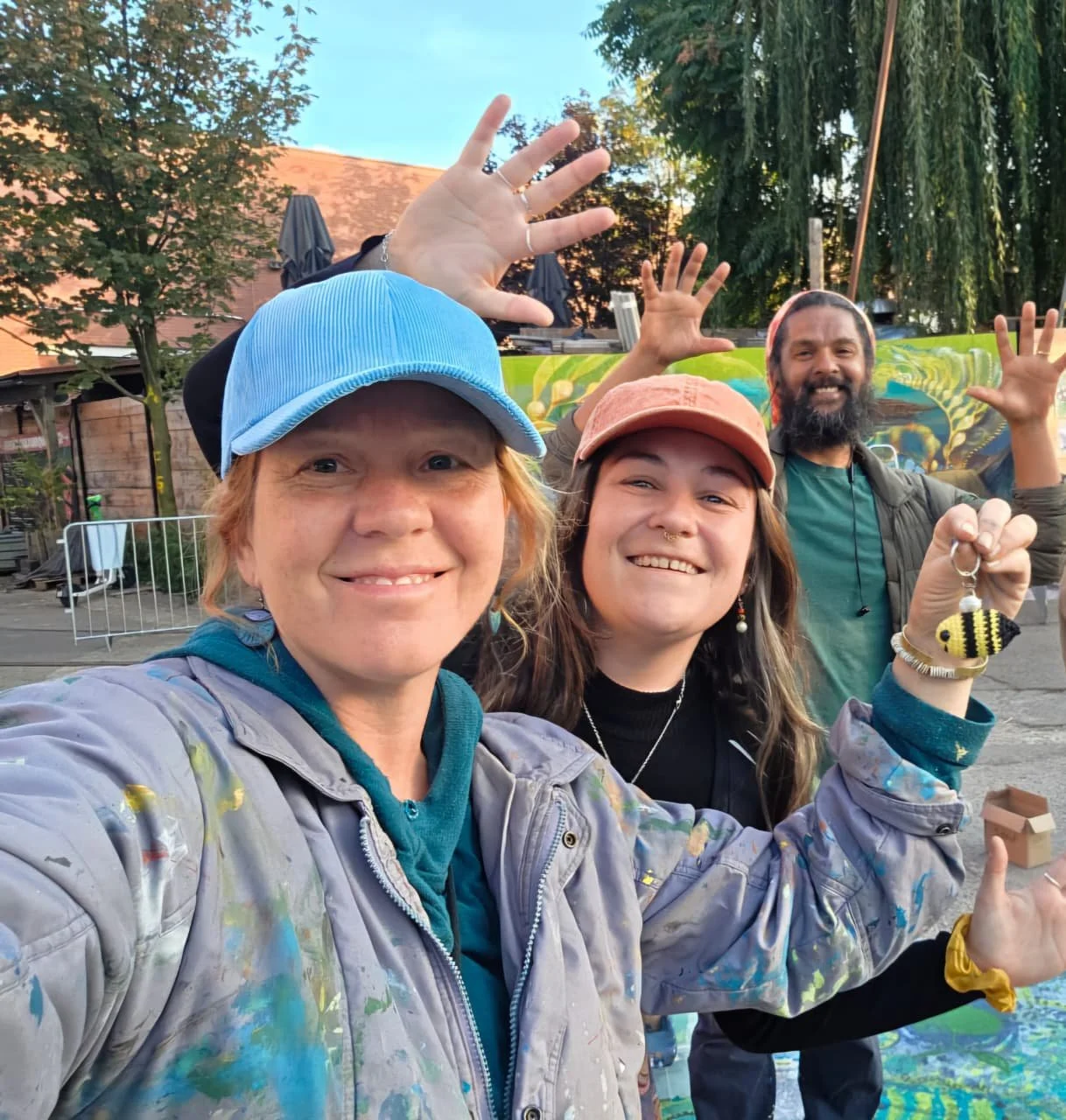
The mural was then completed by members of the Cape Town graffiti crew: HandCantrol360°: XAMǂOAXA|AE (MAK1ONE) & CareMade (CareCreative). The artists focus on creating powerful graffiti murals which draw attention to nature & indigenous southern African connection, featuring the indigenous Khoisan concept “Abuxaun”, meaning “returning back to the beginning to reconnect with nature”. In this graffiti mural, Cape Town’s two oceans meet Berlin's canal waterways, featuring local species from these two habitats.
Species featured in mural
Cape Town species:
Cape fur seal, zebra fish, Cape stumpnose, box jellyfish, bladder kelp
Berlin species:
European beaver, little grebe, European bee-eater, common nightingale.
The Silent Lab underwater sound journey is an audio and “participaintory” experience: a sophisticated collaboration between the African Bioacoustics Community (represented by Dr Tess Gridley and Catherine Nadin), CareCreative (Claire Homewood), Tom Wolschitz (Starkmacher) and featuring evocative poetry by Toni Giselle Stuart.